
Flexible Packaging Coffee Structure & Barrier Films: How to Choose the Right Laminate
Flexible packaging coffee structure barrier films are multi-layer laminated materials engineered to protect roasted coffee from its four primary enemies: oxygen, moisture, UV light, and aroma loss. A typical high-barrier coffee pouch combines three functional layers—an outer print layer (PET, BOPP, or Kraft paper), a middle barrier layer (Aluminum foil, VMPET, or EVOH), and an inner food-contact heat-seal layer (LDPE or PLA). Selecting the right laminate directly determines your coffee’s shelf life, packaging cost, and recyclability.
In this technical guide, our packaging engineers at Zhongfeng Packaging break down the exact film structures, oxygen transmission rates (OTR), water vapor transmission rates (WVTR), and real-world selection criteria for specialty roasters and wholesale coffee brands.
Why Barrier Film Structure Matters for Roasted Coffee
Roasted coffee beans contain over 800 volatile aromatic compounds and delicate lipids. Once exposed to ambient air:
- Oxygen oxidizes coffee oils within days, turning bright flavor notes flat and rancid.
- Moisture accelerates staling and causes ground coffee to clump.
- UV Light degrades flavor compounds, especially in clear-window pouches without UV blockers.
- Carbon Dioxide (CO₂) continues to off-gas from freshly roasted beans, requiring a structurally strong heat seal paired with a one-way degassing valve.
A single plastic film cannot solve all four challenges at once. That is why modern custom coffee bags rely on multi-layer adhesive or extrusion lamination, where each micron plays a specialized role.
The 3-Layer Anatomy of a High-Barrier Coffee Pouch
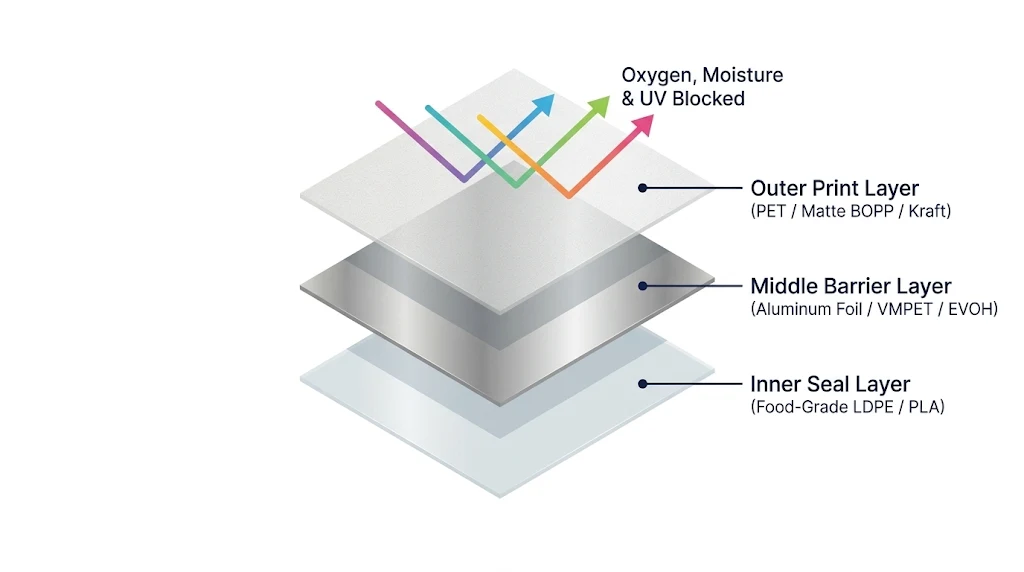
- Outer Layer (Print & Mechanical Strength): Typically 12 µm PET, 18–25 µm Matte BOPP, or 50–70 gsm Kraft paper. It provides scuff resistance, heat resistance during sealing, and a smooth surface for digital or rotogravure printing.
- Middle Layer (The Core Barrier): The engine of freshness. Aluminum foil (
AL, 7–9 µm), metallized polyester (VMPET, 12 µm), orEVOHco-extruded barriers block oxygen, moisture, and light. - Inner Layer (Food-Contact & Heat Seal): Typically 60–100 µm food-grade LDPE, LLDPE, or compostable PLA. It ensures airtight heat sealing, prevents flavor scalping, and gives the pouch stiffness to stand upright on retail shelves.
Comparison of Coffee Packaging Barrier Film Structures (OTR & WVTR Data)
Use the engineering table below to compare the five most common flexible packaging coffee structure barrier films used in North American and European markets:
| Film Structure | Typical Thickness | OTR (cc/m²/24h)* | WVTR (g/m²/24h)* | Light Barrier | Estimated Shelf Life | Recyclability | Best For |
|---|---|---|---|---|---|---|---|
| PET / AL / PE (Aluminum Foil) | 120 – 145 µm (4.7 – 5.7 mil) | < 0.1 | < 0.1 | 100% Opaque | 12 – 24 Months | Non-recyclable | Export coffee, ground coffee, maximum aroma retention |
| PET / VMPET / PE (Metallized Film) | 110 – 130 µm (4.3 – 5.1 mil) | 0.5 – 1.5 | 0.5 – 1.5 | High (~99%) | 9 – 12 Months | Non-recyclable | Everyday specialty roasters balancing barrier & budget |
| Kraft / VMPET / PE (Natural Kraft) | 130 – 160 µm (5.1 – 6.3 mil) | 0.8 – 2.0 | 1.0 – 2.0 | High (No window) | 6 – 12 Months | Non-recyclable | Artisanal, organic-look café retail pouches |
| MDO-PE / PE-EVOH-PE (Mono-Material) | 120 – 140 µm (4.7 – 5.5 mil) | 1.0 – 3.0 | 2.0 – 4.0 | Medium (Printed) | 6 – 12 Months | Recyclable (#4 LDPE) | Eco-conscious DTC & European supermarket brands |
| Kraft / PLA or NK / PBS (Compostable) | 120 – 140 µm (4.7 – 5.5 mil) | 3.0 – 8.0 | 5.0 – 15.0 | Medium | 3 – 6 Months | Industrial Compostable | Fast-turnover local roasters & zero-waste cafés |
*Note: OTR (Oxygen Transmission Rate) measured at 23°C / 0% RH; WVTR (Water Vapor Transmission Rate) measured at 38°C / 90% RH. Exact values vary by resin grade and thickness.
Deep Dive: Which Coffee Barrier Structure Should You Choose?
1. PET / AL / PE (The Gold Standard for Long Shelf Life)
If your coffee ships internationally, sits in grocery distribution centers, or is sold pre-ground, aluminum foil (AL) remains unbeatable. With near-zero OTR and WVTR, it locks in delicate single-origin aromatics for up to 24 months.
- Pro Tip: Add a Matte BOPP top layer (
Matte BOPP / PET / AL / PE) for a luxury velvet-matte finish that resists fingerprints on retail shelves.
2. PET / VMPET / PE (Best Cost-to-Performance Ratio)
Metallized PET (VMPET) deposits a microscopic layer of aluminum onto polyester film. While its barrier is slightly lower than pure foil, it resists pinholing from sharp creases better than foil and reduces material cost by roughly 15%–25%—making it the most popular choice for coffee bags wholesale.
3. Recyclable Mono-PE (MDO-PE / PE-EVOH-PE)
Traditional foil laminates cannot be recycled because plastic and metal layers are permanently bonded. Today, mono-material polyethylene (Mono-PE) structures use Machine Direction Oriented PE (MDO-PE) for stiffness and a thin <5% EVOH core layer for oxygen protection. They deliver 6–12 months of freshness while qualifying for Store Drop-Off / LDPE #4 recycling streams.
4. Industrial Compostable Structures (Kraft / PLA or Cellulose / PBS)
Plant-based bio-films appeal strongly to sustainability-driven consumers, but they naturally have higher WVTR (moisture permeability). We recommend compostable coffee bags primarily for local roasters with fast 3–6 month inventory turnover and low-humidity storage environments.
Don’t Overlook the One-Way Degassing Valve & Zipper Seal
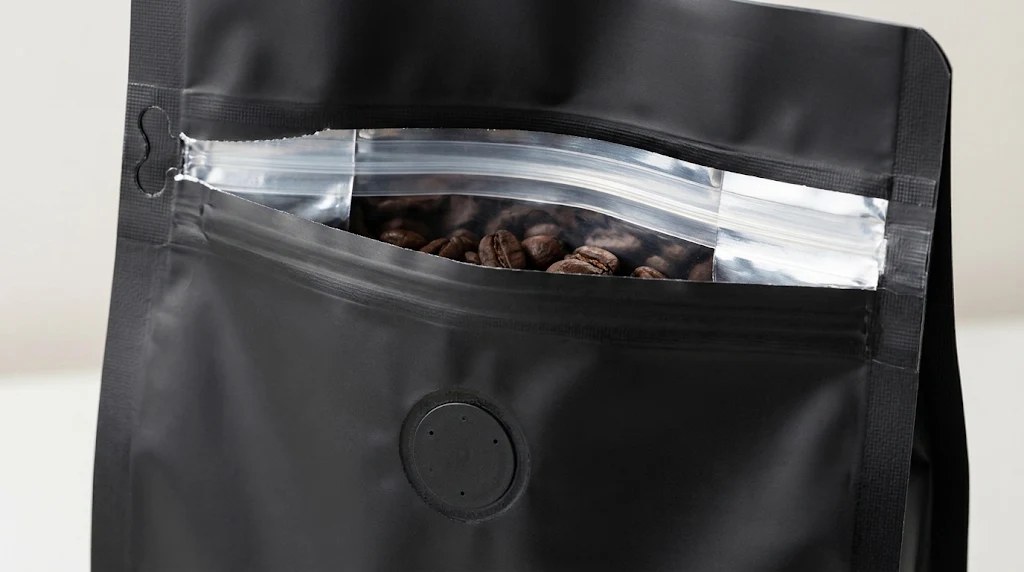
Even the highest-barrier film will fail if the pouch accessories leak oxygen:
- One-Way Degassing Valve: Installed ultrasonically on the inside of the pouch, the valve opens under slight internal pressure to vent CO₂ and seals tightly against external oxygen. Always specify recyclable PE valves when ordering Mono-PE coffee bags so the entire bag stays recyclable.
- Pocket Zipper (Front-Pull Zipper): Unlike standard top zippers, a pocket zipper sits on the front panel of a flat bottom pouch, allowing roasters to heat-seal the entire top opening cleanly for tamper-evident retail display.
Matching Film Thickness to Bag Size
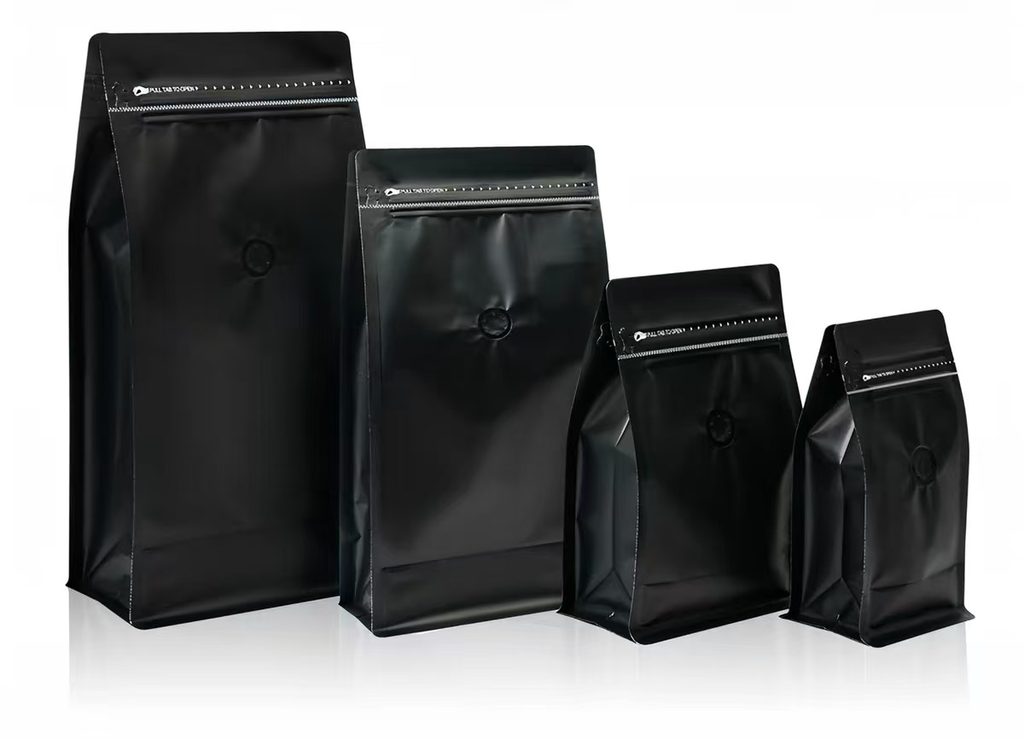
Under-specifying thickness leads to burst seals during transit, while over-specifying inflates shipping weight:
- 8 oz – 12 oz (250g – 340g) Retail Pouches: 115 – 130 µm (4.5 – 5.1 mil) total thickness.
- 1 lb – 2 lb (454g – 1kg) Pouches: 130 – 150 µm (5.1 – 5.9 mil) total thickness.
- 5 lb (2.27kg) Wholesale Gusset Bags: 150 – 180 µm (5.9 – 7.1 mil), often adding a Nylon (PA/NY) layer (
PET / NY / AL / PE) for superior puncture resistance and drop-test durability.
Frequently Asked Questions (FAQ)
What is the best barrier film for whole bean vs. ground coffee?
Ground coffee oxidizes significantly faster than whole beans due to its larger surface area. For ground coffee, we strongly recommend PET/AL/PE (Aluminum Foil) with an OTR below 0.1. For whole bean coffee sold within 6–12 months, PET/VMPET/PE or Recyclable Mono-PE (EVOH) performs reliably.
Does adding a clear window reduce the barrier of a coffee bag?
Yes. Any transparent window removes the foil or metallized layer in that area, exposing beans to UV light and increasing oxygen permeation. If product visibility is essential, specify a high-barrier KPET or AlOx transparent window and limit shelf life expectations to 3–6 months.
Can I order custom coffee bags with foil or recyclable films at a low MOQ?
Yes. At Zhongfeng Packaging, digital printing allows you to order custom coffee bags starting from 100 pieces across Matte PET/VMPET/PE, Kraft/VMPET/PE, and Recyclable Mono-PE structures—with zero cylinder fees and free structural consultation.
Ready to Spec Your Custom Coffee Packaging?
Not sure which barrier laminate fits your roast profile, shelf-life target, and budget? Request a free material sample pack from Zhongfeng Packaging to test our foil, matte black, kraft, and recyclable PE coffee pouches firsthand.