
Mylar Bags Complete Buyer’s Guide: Mil Thickness, Smell-Proof Barriers & Heat Sealing
Whether you are launching a retail line of freeze-dried snacks, botanicals, specialty teas, or moisture-sensitive supplements, choosing the right custom Mylar bags comes down to three engineering variables: film structure, mil thickness, and seal integrity. An under-specified pouch can develop pinholes in transit. For a fast-turnover sample pack, a reinforced 7 mil laminate may add cost without a practical benefit.
This factory-level buyer’s guide breaks down what Mylar bags are actually made of, how aluminum foil compares to metallized VMPET film, which mil thickness fits each product weight, and how to set up and verify a top heat seal for better odor control.
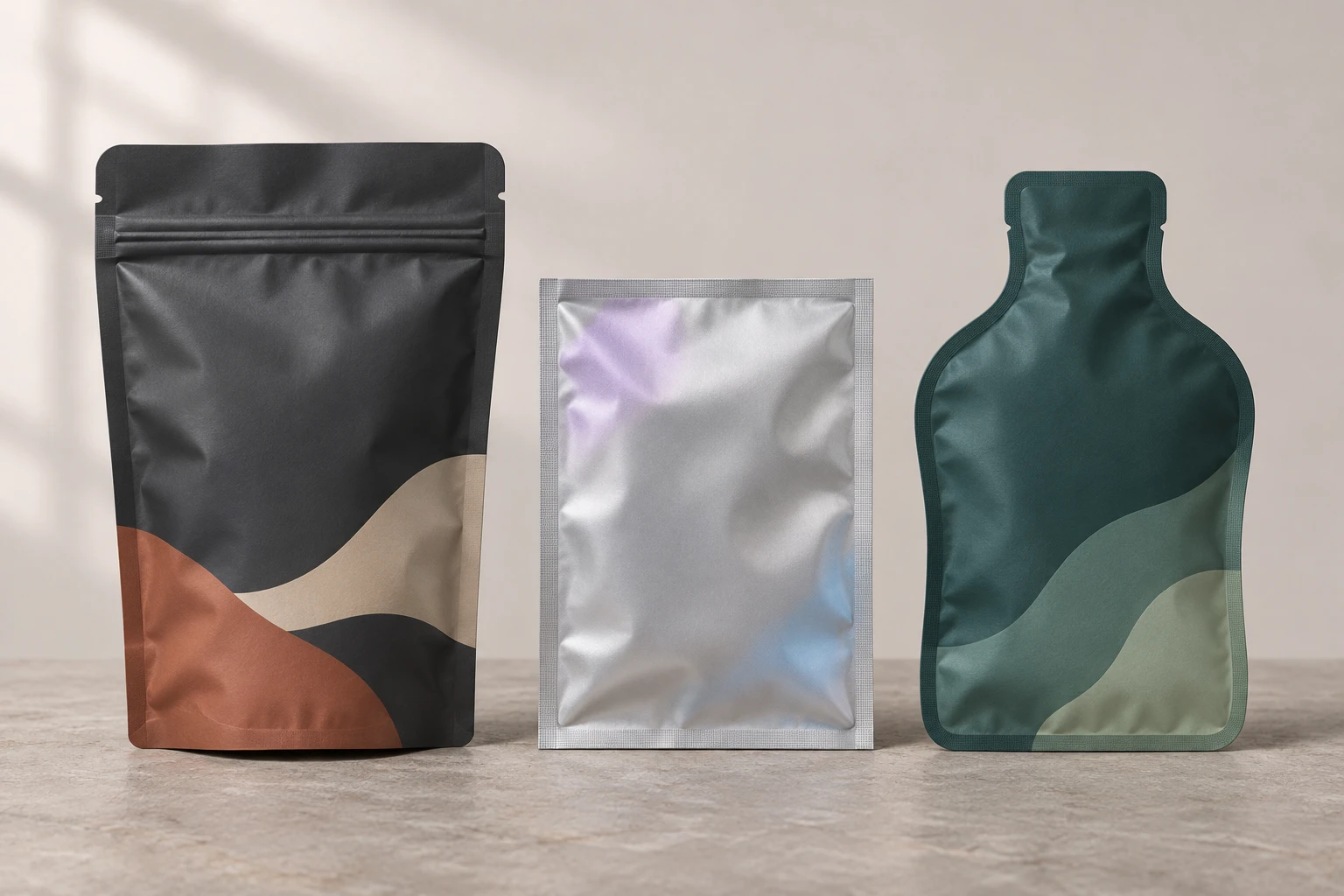
What Are Mylar Bags Actually Made Of?
In flexible packaging, “Mylar” is widely used as a category term for high-barrier laminated pouches built around BoPET (biaxially-oriented polyethylene terephthalate) film. The outer polyester film supplies print and handling properties. Commercial high-barrier pouches combine it with a barrier layer and a heat-sealable inner layer, typically using 3 to 4 functional layers:
- Outer Print & Strength Layer (PET or Matte OPP): Provides tensile strength, crisp graphic reproduction, and scuff resistance during transit.
- Middle Barrier Layer (Aluminum Foil AL or Metallized VMPET): Helps limit oxygen, moisture vapor, light and aroma transmission. Actual performance depends on the complete laminate and finished seals.
- Optional Puncture Reinforcement (Nylon / PA): Added in 4-layer heavy-duty structures (PET/AL/NY/PE) for sharp freeze-dried pieces, heavy fills, or vacuum-like handling.
- Inner Food-Contact Sealant Layer (LLDPE / PE): Fuses under validated sealing conditions to form the top seal. Specify a PE layer suitable for your intended food contact.
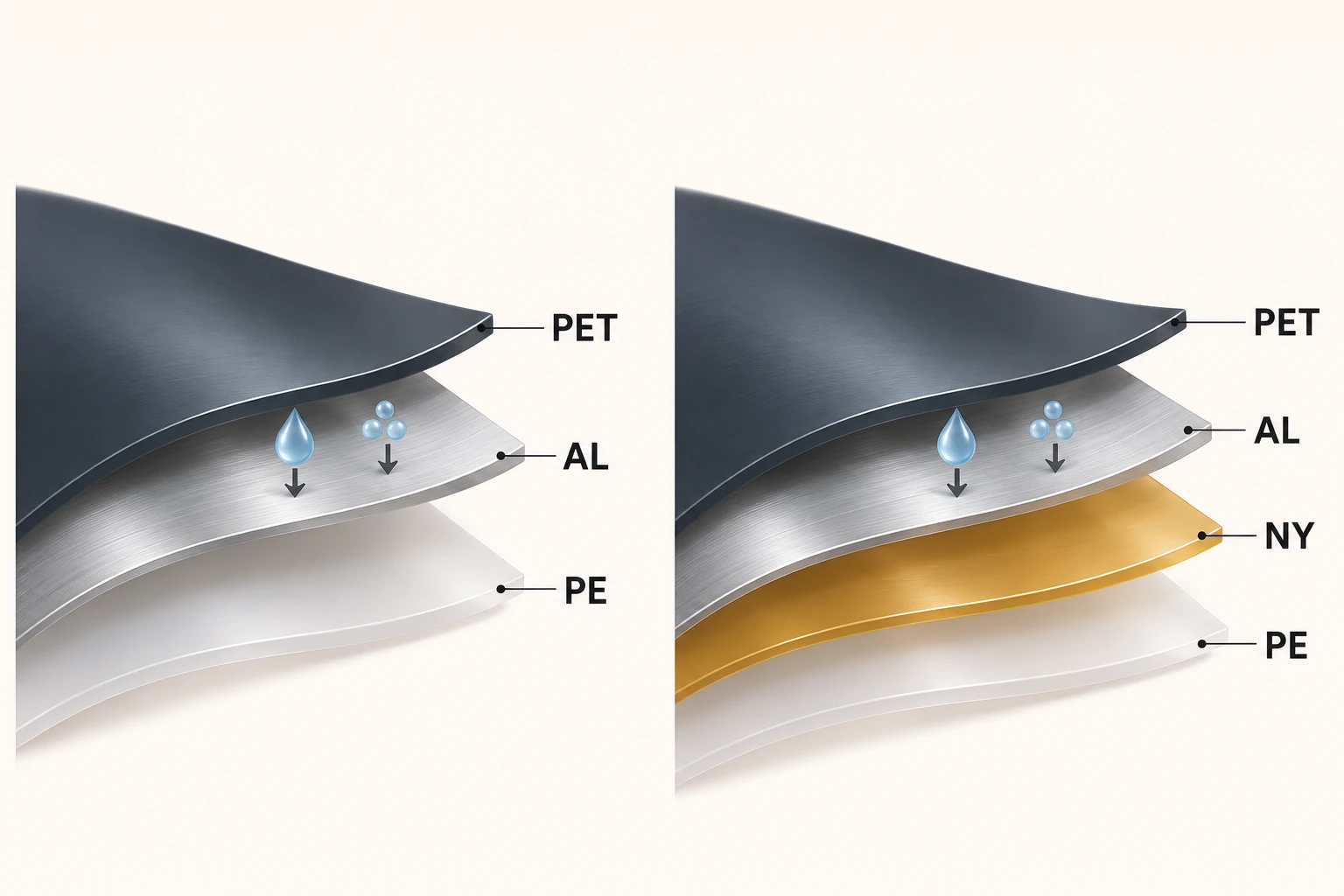
Aluminum Foil (AL) vs. Metallized Film (VMPET): Which Barrier Do You Need?
Both structures look silver on the inside, yet they perform very differently in oxygen transmission rate (OTR), water vapor transmission rate (WVTR), and odor containment. For a deeper lab breakdown of OTR and WVTR across foil and recyclable films, see our barrier film structure guide or compare all packaging barrier options.
| Feature | Metallized Mylar (PET / VMPET / PE) | True Foil Mylar (PET / AL / PE) | 4-Layer Heavy-Duty (PET / AL / NY / PE) |
|---|---|---|---|
| Barrier Core | Vacuum-metallized polyester (thin aluminum coating) | Solid aluminum foil sheet (typically 7–9 μm) | Solid aluminum foil + oriented Nylon layer |
| Light & UV Blocking | Varies with metallized film grade and coating | Opaque when the foil layer is intact | Opaque when intact, with added puncture resistance |
| Odor-Control Considerations | Good for mild snacks & dry blends | Excellent for pungent herbs, coffee & spices | Foil barrier with nylon reinforcement for rough handling |
| Typical Shelf-Life Target* | 6 – 12 months | 12 – 24+ months | Long-term & freeze-dried storage |
| Best For | Single-serve samples, candies, holographic retail packs | Smell-proof pouches, supplements, roasted coffee | Freeze-dried meals, sharp dry goods, 1 lb – 5 lb bulk |
*These ranges are planning targets. Validate the intended shelf life on the filled and sealed package under expected storage and distribution conditions. Consider product water activity, oxygen and moisture transmission, and seal integrity.
Mylar Bag Mil Thickness Chart (3.5 mil to 7.0+ mil)
One mil equals one-thousandth of an inch (1 mil = 25.4 microns / μm). A common buyer mistake is comparing thickness without checking the barrier layer: a thicker film can have a higher oxygen transmission rate than a thinner foil laminate. Compare measured OTR and WVTR at the same test conditions. Use the chart below to match mil thickness to your bag format and fill weight:
| Thickness (Mil / μm) | Rigidity & Hand Feel | Recommended Bag Format | Ideal Applications |
|---|---|---|---|
| 3.5 – 4.5 mil (90 – 115 μm) | Flexible, lightweight, economical | Lay-flat 3-side-seal pouches | 1 g – 2 oz samples, single-serve drink mixes, trail packs |
| 4.5 – 5.5 mil (115 – 140 μm) | Crisp retail stiffness, stands cleanly | Stand-up pouches & custom die-cut shapes | 2 oz – 1 lb snacks, gummies, botanicals, loose-leaf tea, powders |
| 5.5 – 6.5 mil (140 – 165 μm) | Structured, premium tactile weight | Stand-up & flat-bottom Mylar bags | Smell-proof retail bags, supplements, specialty coffee, heavy treats |
| 6.5 – 7.0+ mil (165 – 180+ μm) | Heavy-duty puncture protection | Reinforced 4-layer stand-up or bulk pouches | Freeze-dried meals, emergency dry food, sharp or bulky 2 lb – 5 lb fills |
Designing Mylar Bags for Odor Control
Treat the zipper as a reclosure. For unopened packs, odor control depends on the laminate and a verified continuous top seal. Evaluate the finished pack with your actual product.
To achieve reliable odor containment in retail and shipping:
- Specify a True Foil Core (PET/AL/PE) or High-Barrier VMPET: Avoid clear PET/PE or unlined kraft if odor containment is mission-critical.
- Heat-Seal Above the Zipper & Tear Notch: Place a continuous top seal in the designated header above the notch and zipper. Check the finished pack for leaks and confirm consistent seal strength.
- Choose the Right Zipper Track: Pair your top heat seal with a heavy-duty press-to-close zipper or a child-resistant (CR) zipper for repeat resealing after first opening. Compare styles on our zipper options page.
How to Heat-Seal Mylar Bags Correctly (Temperature & Dwell Settings)
In many Mylar laminates, the PET outer film supports printing and the inner PE layers fuse at the seal. Temperature, dwell and pressure work together. Establish the settings with your laminate supplier and sealer manufacturer, then test on the production machine.
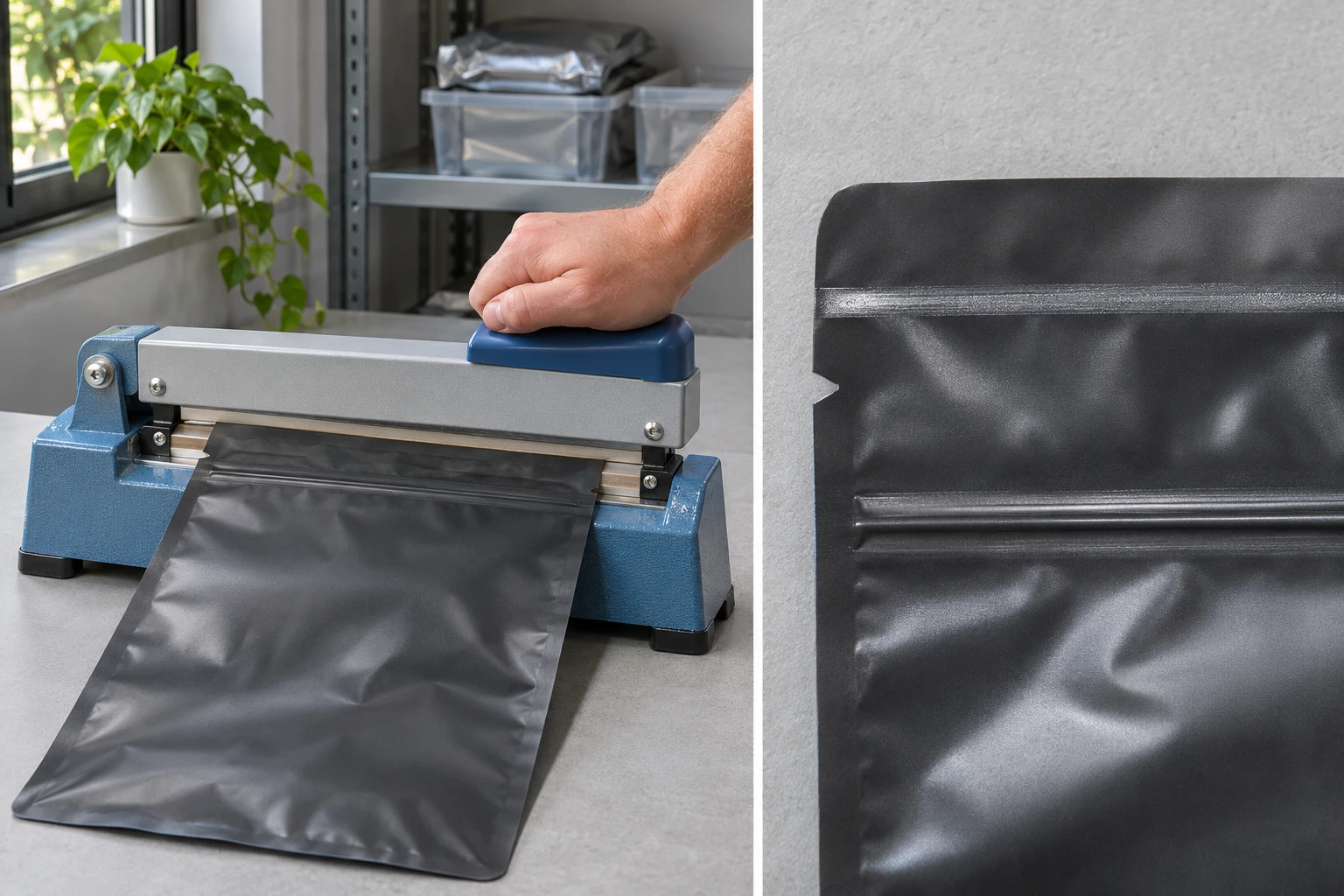
Practical Heat-Sealing Checklist
- Sealing Zone: Use the pouch drawing to locate the sealing zone above the notch and zipper. Keep the sealing area clean, flat and clear of product.
- Constant-Heat and Band Sealers: Start from the supplier’s recommended window. Confirm temperature, pressure and dwell or belt speed for the actual laminate and pouch geometry.
- Impulse Sealer Tip: Follow the machine’s pulse and cool-under-pressure instructions. Set up on sample bags, and adjust within the validated range for your film and header width.
- Quick QC Pull Test: After cooling, inspect seal continuity and use a pull check for an initial screen. For production, specify acceptance criteria and verify seal strength and leaks. See ASTM F2029 for laboratory heat-sealability testing.
Using Oxygen Absorbers with Mylar Bags
An oxygen absorber may help control oxidation in a validated package for dry, shelf-stable food. Use a documented food-safety process for the actual product, including its water activity and intended storage. Low-oxygen packaging can create a botulism hazard for moist foods. See the FDA guide to water activity.
- Size for the Validated Pack: Confirm absorber capacity with the supplier based on actual headspace, trapped air, barrier performance and your target storage period. Measure residual oxygen on the finished pack if it is a required quality attribute.
- Follow Supplier Handling Limits: Observe the working-time and storage instructions for the specified absorber. Keep unused sachets protected from air as instructed.
- Use Only in an Appropriate Food-Safety Process: Exclude moist foods from ambient dry-storage use. Have a qualified food-safety specialist assess any reduced-oxygen application with uncertain water activity.
Custom Finishes, Printing Routes & Low-MOQ Ordering
Digital printing lets brands test matte, metallic or holographic finishes in smaller runs without buying gravure cylinders upfront.
- Surface Finishes: Choose soft-touch velvet matte, high-gloss, metallic shine (printed via selective white ink over VMPET), holographic effects, or Spot UV contrast. Explore our pouch finish options.
- Digital Printing (100 – 5,000+ pcs): On our HP Indigo 200K press, custom printed Mylar bags start at 100 pieces per design, size, material, and finish with $0 plate fees and production in as fast as 5 business days for eligible orders after artwork proof approval.
- Rotogravure Printing (10,000+ pcs): Once winning SKUs scale into recurring wholesale volume, we seamlessly transition your approved artwork to rotogravure to reduce per-bag unit cost.
Need a recyclable alternative instead of multi-layer foil? Read our guide comparing recyclable Mono-PE vs. compostable pouches.
Frequently Asked Questions About Mylar Bags
What is the best mil thickness for custom Mylar bags?
For retail snacks, tea, herbs and supplements, 4.5 to 5.5 mil (115–140 μm) is a useful starting point. For sharp or heavy dry fills, evaluate a reinforced 6.0 to 7.0 mil (150–180 μm) foil laminate. Verify puncture resistance, barrier and target shelf life on the filled pack.
Are Mylar bags smell-proof without heat sealing?
A zipper alone offers reclosure. For better odor containment before opening, choose a foil (PET/AL/PE) or a suitable high-barrier VMPET laminate and apply a continuous heat seal above the tear notch and zipper. Test the finished pack with your product.
Can I heat-seal custom Mylar bags with a standard tabletop impulse sealer?
A tabletop impulse sealer can work when its jaw width and heat output suit the laminate. Thick foil structures and gusseted folds may need wider jaws or a constant-heat or band sealer. Follow supplier settings and verify the finished seal on test pouches.
Are Mylar bags recyclable?
Traditional multi-layer aluminum foil or metallized Mylar bags are not recyclable in standard curbside streams because multiple materials are permanently laminated together. If recyclability is a priority, consider a Mono-PE option and confirm acceptance of the finished pouch in your local collection stream. See our Kraft & Eco-Friendly Pouches page.
What is the minimum order quantity for custom printed Mylar bags?
At Zhongfeng Packaging, digitally printed custom Mylar bags start at 100 pieces per design, size, material, and finish with zero cylinder fees, and free existing factory sample bags are available (you only cover shipping) so you can test thickness and heat-seal performance first.
Ready to Spec Your Custom Mylar Bags?
Share your product type, target fill weight, preferred silhouette (stand-up, lay-flat, or die-cut), and quantity per design. Our packaging engineers will confirm the right mil thickness, barrier film, and factory-direct pricing—or send free stock Mylar samples for seal and fill testing.
Explore Custom Mylar Bags & Specs → | Request a Formal Quote ↗